Learning from the Labor Movement: A New Vision for Ensemble and Cooperative Practice

On Turtle Island (so called USA) today, artists are not seen or valued as workers. Due to this misperception, we don’t receive the respect, benefits and protections that so many fellow workers have organized, mobilized and fought to win.
Historically, winning for workers looks like the creation of labor unions to form layers of protection and acquiring shared benefits to ensure a foundation of safety and preparation for the future. In the early years of the twentieth century, a surge of unionism, led by the American Federation of Labor, swept across the nation as workers turned to collective action to secure a measure of dignity, security, and a greater share of the wealth they helped to produce. We, as arts workers, deserve these protections and benefits as well! In order to do this, we do have to define ourselves through these labor terms. We fully acknowledge that it is complicated and complex to define our labor as artists because it is also sacred and devotional to our communities and lineages. We’re not churning out some product that people buy for a set price. In labor terms, we are often the owner, product, factory and distributor all rolled into one.
There are 17 unions in the theater industry, but they’re difficult and expensive to join. And they only guarantee support if you work enough weeks to qualify.
Over the last few years as we transform NET to meet the moment, we heard many of you say that you need support in these very areas: labor protection and shared benefits. With that in mind, we embarked on a research project to see what we could glean from an international history of labor organizing.
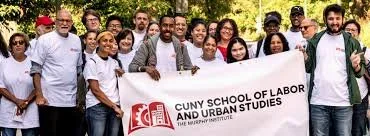
In the spring, we were invited by the badass professor Rebecca Lurie of the Community and Worker Ownership Project at the City University of NY School for Labor and Urban Studies (CUNY) to be “Project Champions” in their Cooperative Management for a Changing World class. “Project Champion” means we go to class to learn with the students and they give our project special attention as a case study for their class.
Throughout the course, we set out to explore a wide landscape of questions, possibilities, and future-facing practices. Our objectives included:
Deepening our understanding of protections and benefits available to members of cooperatives and unions- and how these structures safeguard worker-owners.
Studying real systems of worker-owner management, from small collectives to large-scale organizations, to see how governance shifts as structures grow.
Mapping the spectrum of member-run models, and examining what becomes possible when workers truly shape the direction of their organizations.
Identifying ways to share these learnings more broadly, ensuring that knowledge circulates beyond the cohort.
Imagining financial models grounded in the solidarity economy, and considering how these alternatives could transform creative and labor ecosystems.
Experimenting with those alternative models in our own practices, testing what’s viable now and what might be built next.
Exploring global perspectives on the future of worker-ownership, including emerging models, adaptations, and new approaches gaining momentum around the world.
Investigating shared-benefit and health-plan options, from established systems to pilots and prototypes still in development.
Surveying co-ops across sectors, especially those that bridge the creative economy with other industries, to see how ecosystems intersect.
Understanding how co-ops collaborate with one another, and what mutual-aid infrastructure already exists across this broader ecology.
Clarifying the distinctions between collaborative governance and worker-owned governance, and why the nuances matter.
Studying how meaningful change happens; whether in policy, culture, or governance- and how these shifts take root inside cooperative structures.
Rebecca curated a slew of guests which NET could learn from and brainstorm with, including Mondragon, Federation of Worker Cooperatives, Freelancer’s Union, Union Cooperative Initiative, Coop Cincy, and various lawyers and coop developers. Even within the broader theater field, not everyone has heard of ensemble practice, so explaining how we differ from more commercial theater ventures (like Broadway) was a good learning opportunity for us as well.
We learned that in many ways, ensembles and collectives are cooperatives.
Meaning that those who make the product share the profits of the product and own/govern the mechanisms through which the product is made. We make work together and share “ownership” of the work. We build the necessary infrastructure to hold the creation and dissemination of the work. We are the machinery and the product. We work really hard. Cooperative economics, at its core, is about collective power. It’s about communities choosing to pool what resources they have (time, money, labor, etc.,) to build something that benefits everyone. We could have access to shared/portable benefits through joining a union, forming a buying cooperative, forming a union cooperative and continuing to advocate for policy reform around shared benefits for artists and freelancers.
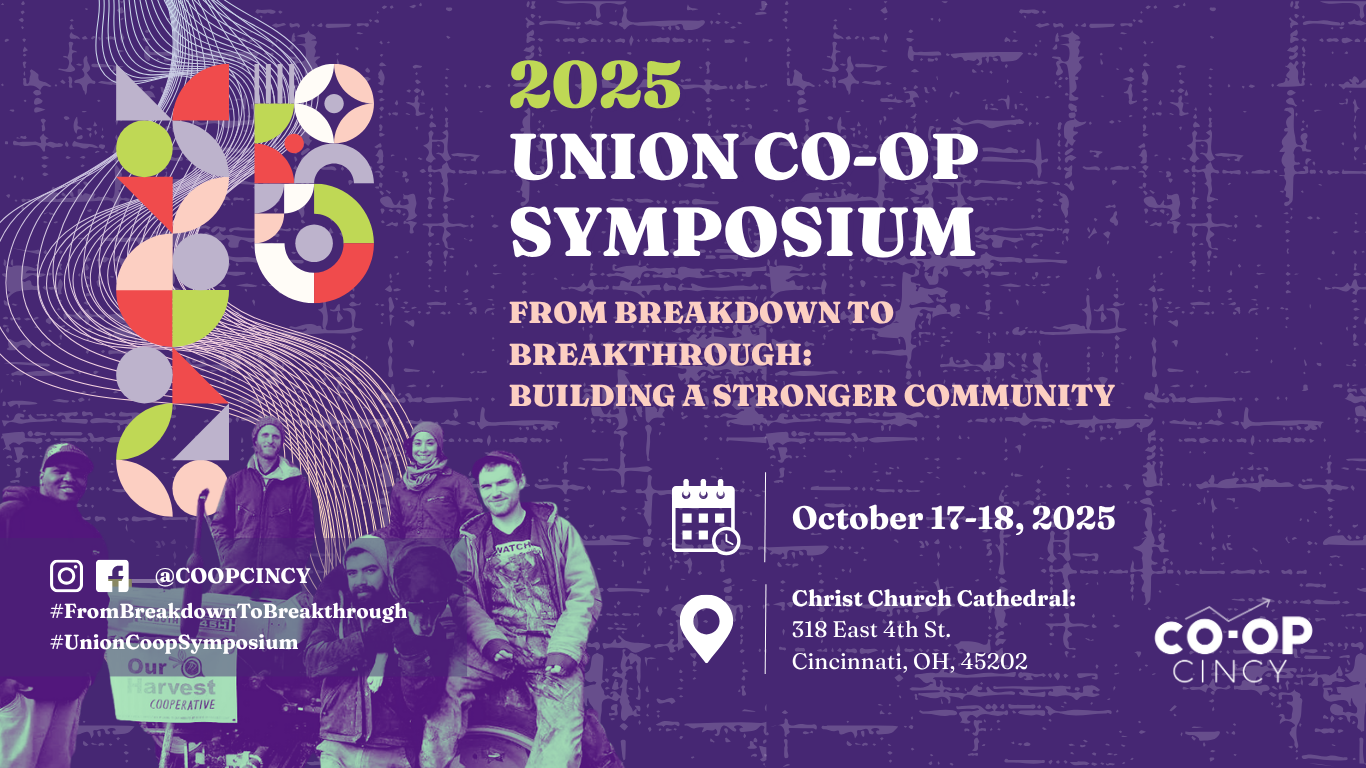
With these new learnings we ventured to the Union Cooperative Conference hosted by Coop Cincy. Our main goals were to network and see what more we could learn from innovations and experiences across industries.
More to come in part II of this blog post!