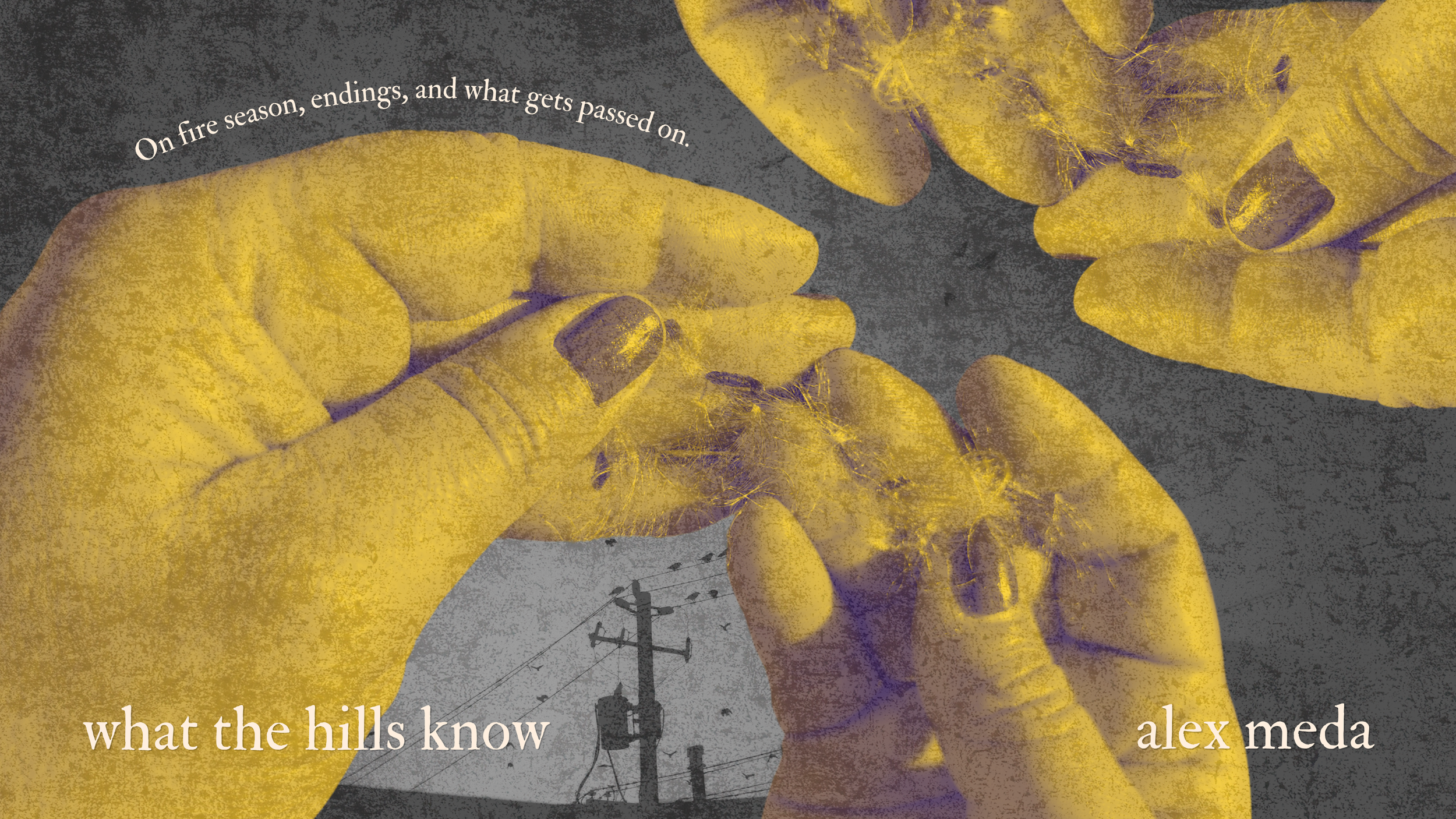
On fire season, endings, and what gets passed on.
Hello friend,
The hills above this city I call home have known how to lose things for a few million years. It’s fire season in Los Angeles and everything that lives on these slopes was built for it. In the Santa Ana Mountains, just south of here, there’s a cypress whose cones stay sealed shut with resin for years, through every rain, through every spring, and open in fire. The heat is the release. And what the fire takes, it gives back as ash: everything the plants spent years pulling up into their branches goes back into the soil, and nothing that burns on that hillside leaves the hillside. It goes down, to the roots, to the seed, to whatever is coming next.
There’s a poppy on those slopes whose seed lies in the ground for decades waiting on one cue, and the cue is smoke. Rain won’t wake it. Sun won’t wake it. The people walking the black hills the April after a burn are the first in a generation to see it bloom.
These plants are built for fire on a long clock, once a generation or so. When the fires come every ten years instead of every hundred, nothing gets the time to recover, and the whole hillside turns into grass, which is cheaper, and thinner, and burns even faster. That’s the threat. Burning again before you’ve grown back. Everything alive on those slopes keeps time in generations.
Shame on us for keeping it in fiscal years. Grass is what a field becomes when it burns on the short clock: a million separate blades, each one rooted an inch deep, nothing holding anything, all of it lighting up at the first chispa.
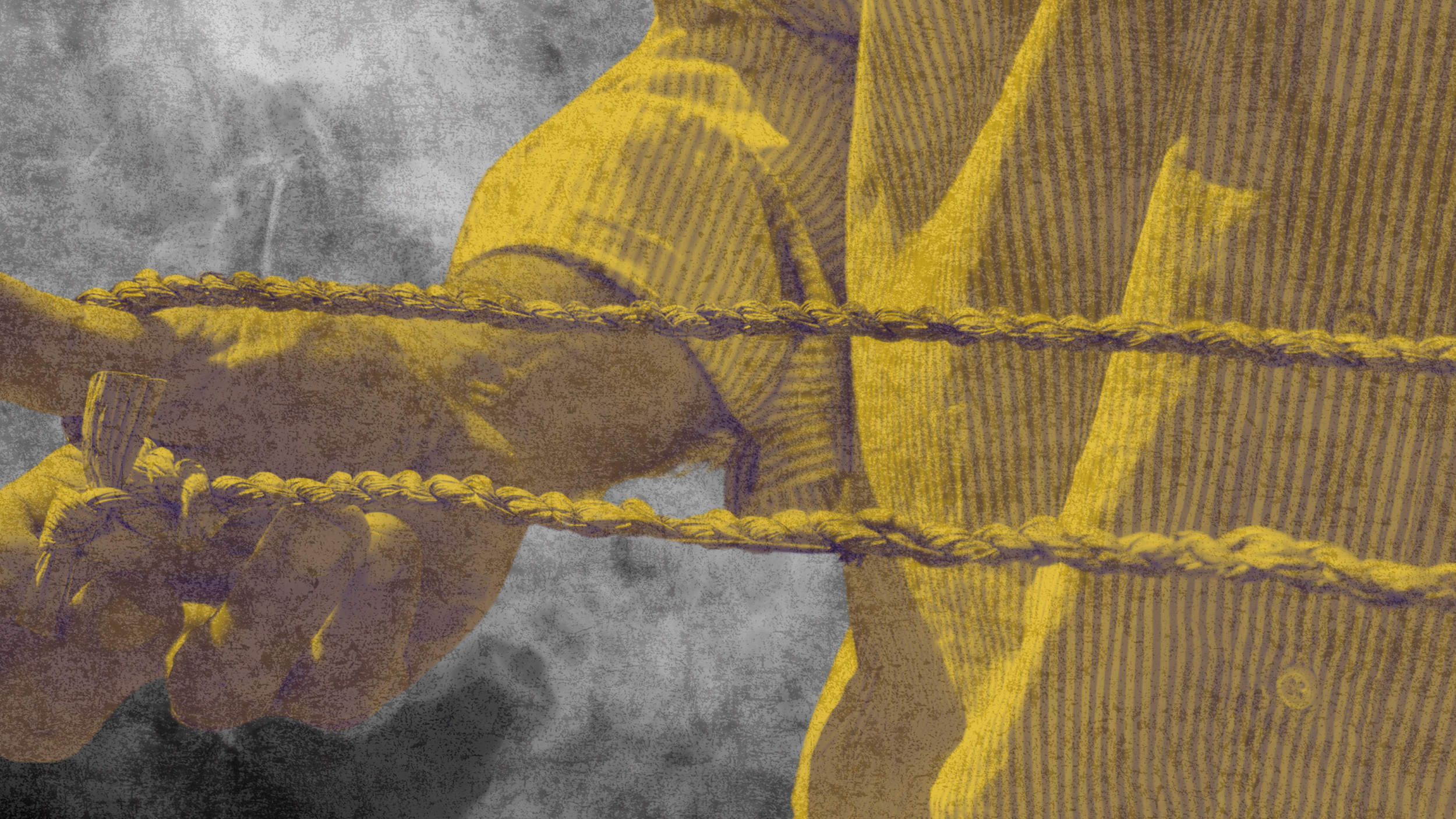
This land has an older way, and it belongs to the people who were here first. The Chumash, the Tongva, and other nations along this coast set fire to it on purpose, in the right season, together. Chumash women burned the seed fields after the harvest so the next year’s plants would come. Their fire was small and came often, on ground that wanted it, while the hills above kept their own slower clock. In 1793, the Spanish made it a crime, and it stayed a crime, more or less, for two hundred and thirty years. And, what do you know, the fields filled with foreign grass that burns like kindling.
In the fall of 2023, on restored grassland at UC Santa Barbara, a Chumash elder lit a burn no one in her community had ever witnessed. And, the university that restored the land stood beside them to learn. That fire had a season, and it had witnesses.
Our field has been burning the other way. Payroll to payroll, crisis to crisis, leader to leader, with no April in between, and we have called that resilience. Or business as usual. Or recovery. On the hillside, what burns becomes the food for whatever comes next. In this field, what ends becomes inventory. The building to a buyer, the audience to nowhere, and the artists and cultural workers who gave their whole careers to a retirement this field never built. We are letting our people die with nothing while we argue over business models as if we are in search of a one-size-fits-all course correction. Worse yet, we then stand on bare dirt (read: the hell that is the online scroll) and call the next generation ungrateful for not blooming.
The tables that hold us are burning uncontrollably too. Our networks, our service organizations, the ones that run the thread between a dance company, a storefront ensemble, a scholar, and a presenter who will never share a building. They exist so that a neighborhood storefront and a building with a million-dollar artistic director are in the same conversation about the same country, and I think that is so important. Fundamental, actually. They are where a field does its thinking, where collaborations emerge, where conflict gets to be generative, where we learn to lead, where generations meet. That is worth protecting. And right now they are cutting, merging, and closing one at a time, alone, at a payroll deadline.
It is entirely in our hands to decide what survives, and we cannot succumb to the idea that we are powerless to make choices. To lead differently. To close differently. To sunset with intention. To transition with dignity. To trust that getting smaller is not a loss but an opportunity to reset, reconfigure, and begin to prefigure a new future. And I hope it is more just, more accessible, more liberated.
The way we end a thing is already the first draft of what comes after it. If we want a field that shares power and tells the truth, the closing is where we start practicing both.
In January 2025, I sat in my house in Boyle Heights and watched the world around me explode. The texts came in all night, artists who had saved their whole lives for a tiny house watching it go up in flames. In the middle of it, an organization I briefly served asked the two of us who live in Los Angeles to write a statement saying it stood with artists impacted by this catastrophe. A statement. The city was on fire. Nobody who lost a house that week needed our position on the matter. They needed an outlet, a table, and somebody awake. The only thing I could do was unlock Studio Luna’s doors and leave the lights on, for anyone who had nowhere left to work from and anyone who just needed electricity. It felt so small an act. But leading isn’t always the thing people need from you. Sometimes they just need you to stand next to them. Sometimes you just need to be a witness. Sometimes, you just need to open a door.
That storefront, with its small and unassuming footprint, can be a sanctuary in a fire. It might always be dusty because the front door doesn’t fully close, but it’s a third space that is ours. For our community. A place to sit at a table and think, or plan, or, my favorite, practice the art of being delusional together.
It is also what grew after an ending. In 2014 I left Chicago, carried the company I led there to Los Angeles, and rebuilt it under a new name. I could leave the lights on in January because something had closed years before.
I have been wondering why I am so obsessed with all things transition and transformation. It was learning not to grip so tight that taught me to trust that what comes out of the closing of a chapter has meaning and purpose. We are in that doorway right now as a field, and we need to trust ourselves and each other to design our next era.
Recently, I have been part of another big transition, at Theatre Communications Group, where I co-chair the board. That ending is TCG’s and we are in the messy middle of it. But if we do our job right, if we refuse to stay isolated, if we share the challenge and trust the minds and imagination of the field to help us into our next iteration, I know what grows back will be a TCG this field helped shape and can call its own, and maybe one none of us has seen yet.
I’ve been mesmerized by the term coherence this month. In nature, it is the parts of a system trading feedback until the whole can move as one body. For people, it has to be learned. It gets practiced. It gets built in rooms.
I watched it get built in October. Inside NETWeek: Bay Area, Rad and I sat for two days with a room of national service organization leaders who had been stuck for close to three years on one question: where do our values align? We asked another one. Who do you serve, and what do they need? The overlaps came fast. Livable wages. Portable benefits. New ways to produce. By the next day, people who believed they couldn’t work together were planning sessions inside each other’s gatherings.
I’ve started calling that a convergence. Two or more of us stepping inside each other’s rooms to work.
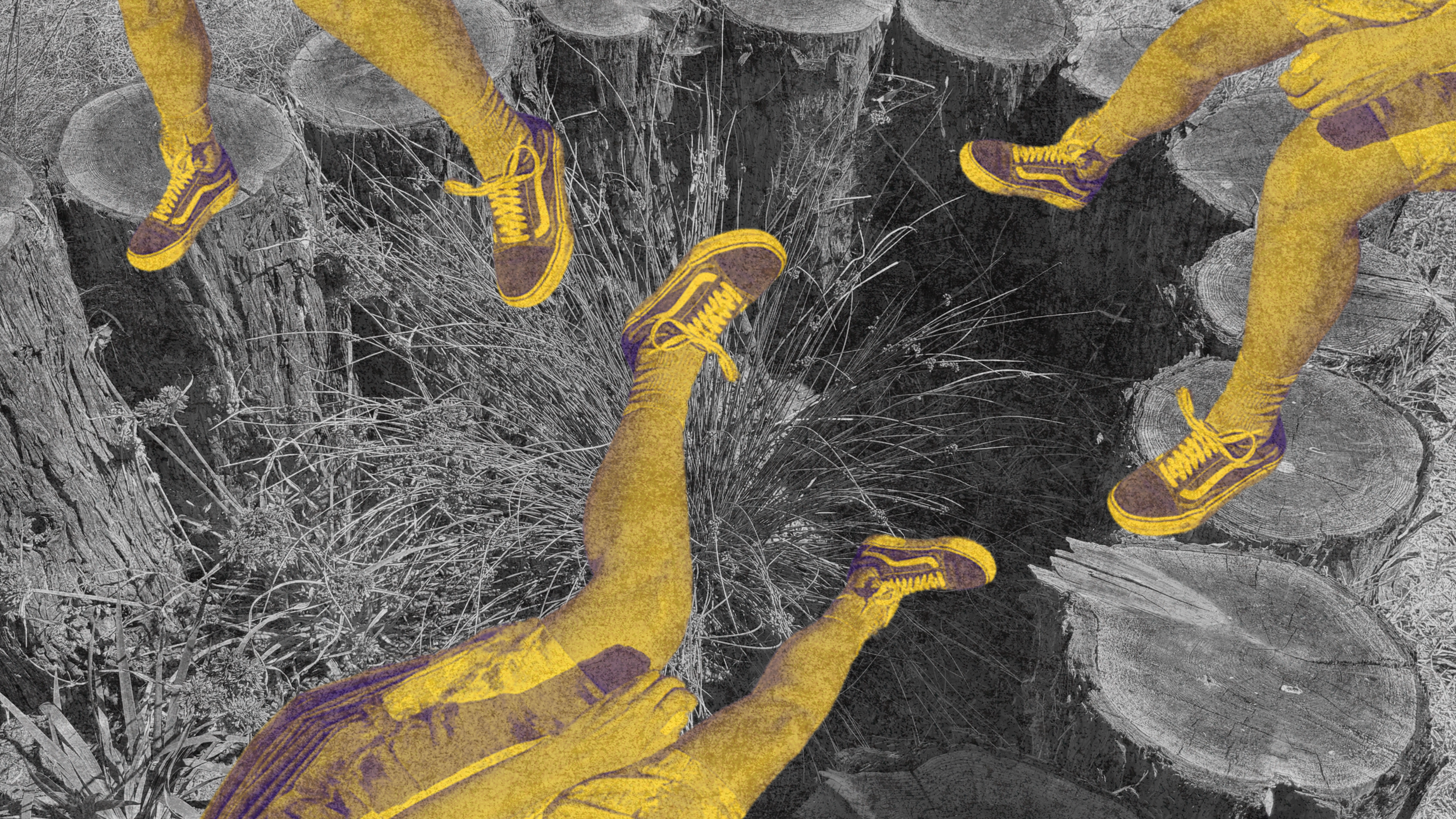
The pressure of change and perceived lack is going to move all of us. The only question is whether it scatters us or presses us closer than comfortable, and the hills have already answered. Walk a burn site and you’ll see it: the surface is gone, every leaf, every branch, every green thing anyone photographed. But what survived is the part that was holding on underground. The root crown under the chamise. The burl under the manzanita. Everything that made it was rooted in the same ground as its neighbors.
What is rooted together, what is in relationship, is the only thing on that hillside that fire can’t take, and it’s the only thing in this field that fire can’t take either.
For my stewards, here is how I think we tend a burn.
A tended burn is the future practiced on one patch of ground.
The ending is yours to choose. You tell the people it cost what you got right, what you got wrong, and what you are carrying forward. The story of it belongs to them.
You burn in season, planned and with time, never at a payroll deadline.
Nothing leaves the hillside. The archive, the relationships, the know-how, the programs worth keeping all land somewhere, with someone.
It is witnessed. It is shared out. It becomes rich nutrient for the soil.
Leadership does not mean knowing all of the answers; stewardship is knowing a decision made is a thing you can move with. You can repair it, you can change course, you can be wrong out loud and fix it in front of the people it cost. But a decision you refuse to make keeps you stuck, and staying stuck is never the right answer. The seed waiting on its cue is still. A leader avoiding a decision is stuck, and the hillside can tell the difference. Remember, nothing on that hillside waits for certainty. The cone opens because the heat came, and it had to move.
Release is movement.
The freedom of what comes with release can feel unimaginable at first. Release will inevitably bring hurt, grief, and any other host of important words. But like breathing, holding it all in forever is just not an option.
Moving is how we think, how we experiment, how we try. I have learned, in every room I have ever moved, to not be angry with myself when I start in the wrong direction. Re-direction has become my best friend. I have also learned that we cannot be embarrassed to be seen trying, or messing up, or even the scariest: failing and getting up just to try all over again. Because you never know who is watching and learning from the important part, the getting back up.
A field gets back up the same way: together, or not at all.
Diane Rodriguez taught a generation of us that there is no end of ideas for idea people. And radical, insane, delulu ideas are what is needed now more than ever. She told a room of us in 2013 that it was not enough to arrive at the table, you have to be visible, viable, and vocal, for the community. Emilya Cachapero told every room she ever stood in about an experiment where a room full of people thinking “heads” while a penny flipped made heads come up more often than chance allows, and that if we all keep thinking head of a penny, head of a penny, head of a penny, something incredible happens.
I will always stay thinking “head of a penny.” I am standing in this season with a spine filled with steel and a cotton candy tenderness, because imagining new futures is a gift, a right, and impossible done alone. I am in possession of a deeply felt and very heat-filled hope about the bridge this field can build, together, to the next cycle.
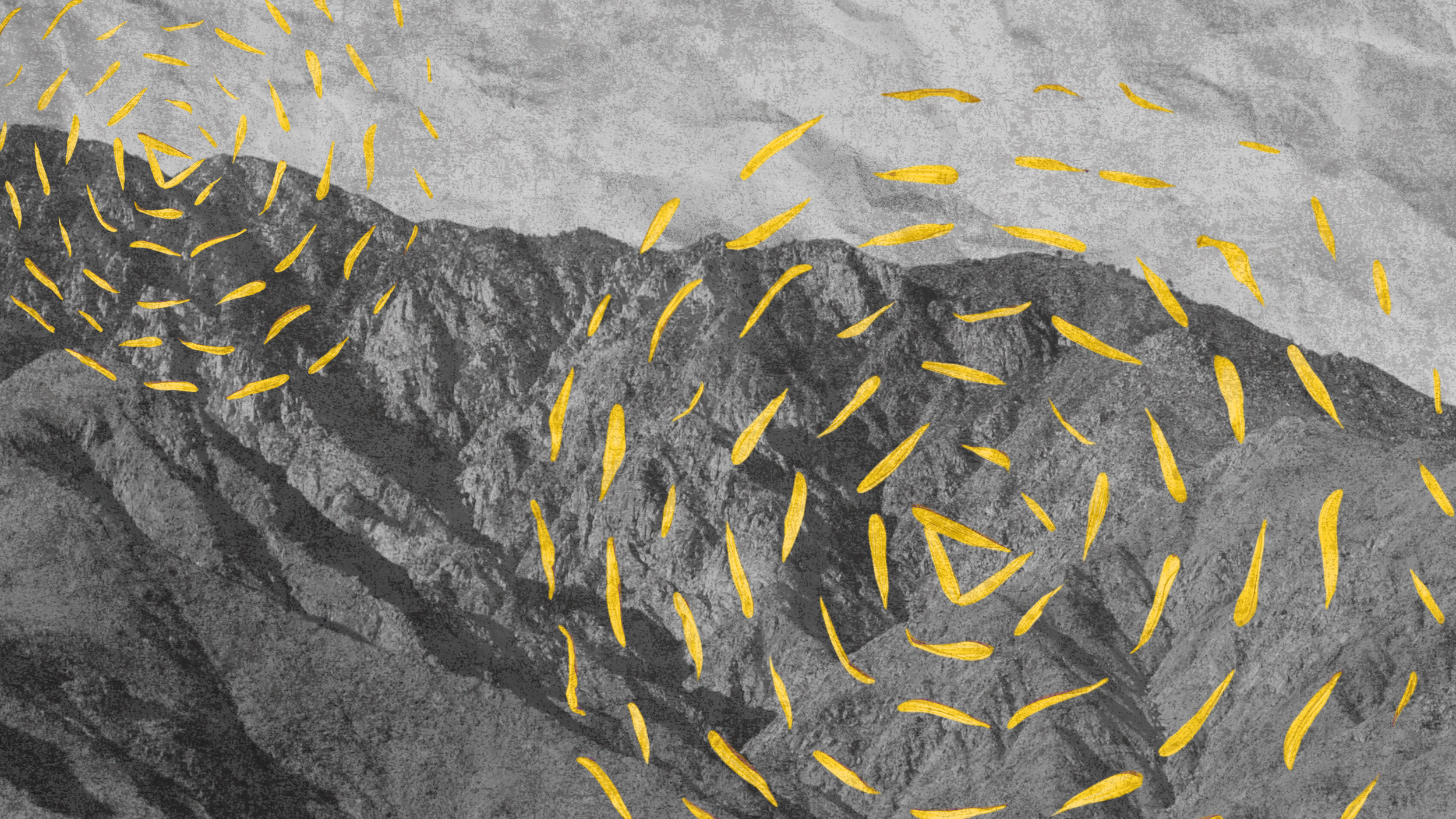
What exactly comes next, or what shape will result, or how success will be defined, none of us can promise. Nobody who lights a burn can. The seed waiting in that ground might be a poppy nobody alive has seen. We are walking into a spring this field has never walked, with more questions than answers, and for my part, I want company in this unknown.
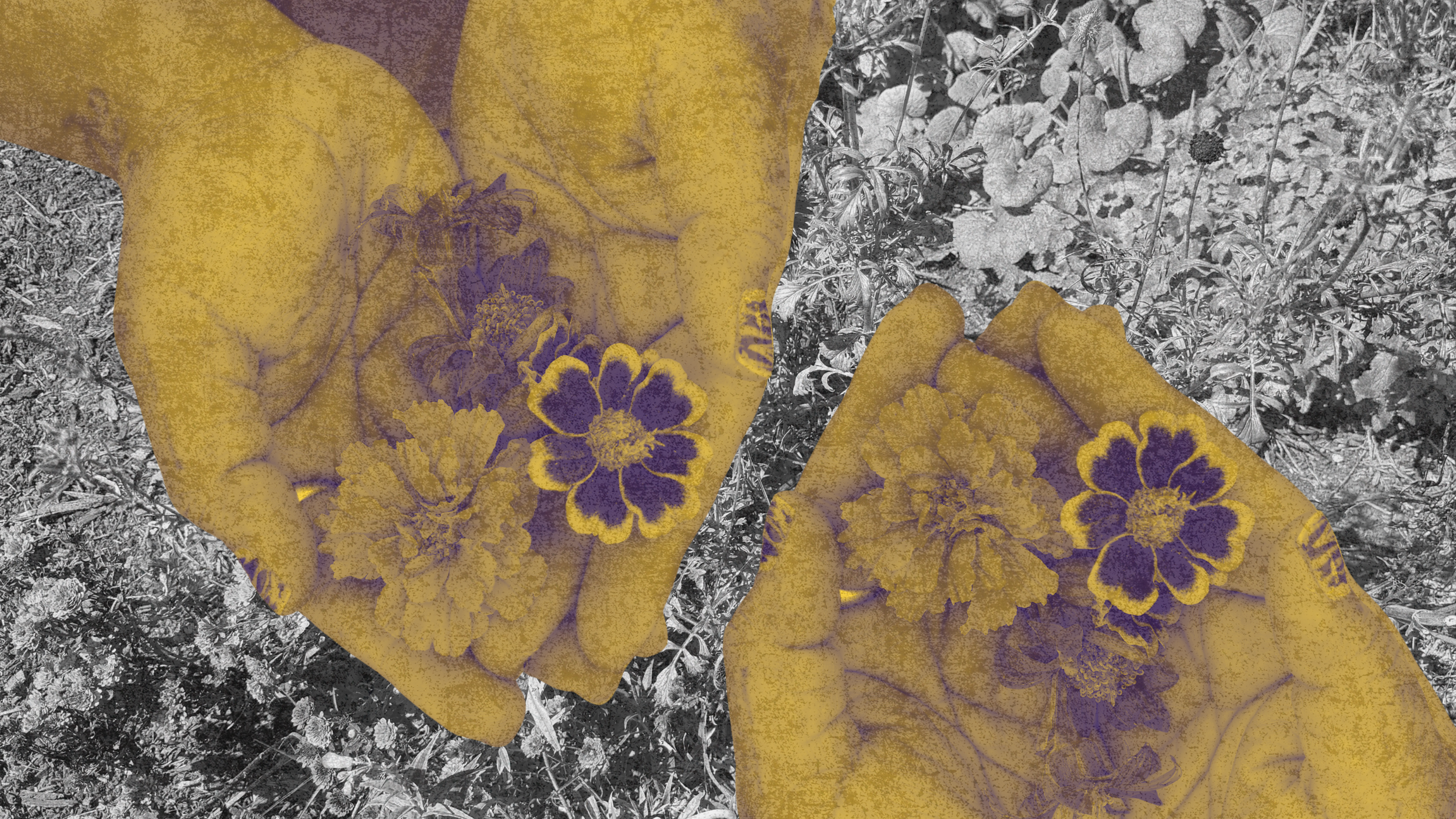
What gets passed on, and who’s responsible, is something we have to always stay asking. What gets passed on is underground. The seed bank was in the soil before anyone named the hill, dropped there by plants that never saw the fire that would wake it. Within a year of the Eaton fire, a neighbor who lost his house in Altadena started spreading poppy seeds across the burned lots, a quarter of a billion of them, his own lot among them, because Altadena was poppy country before it was houses.
The next generation of this field is already in the ground, and was before any of us had a title. Someone a generation ahead of me, one of the people who built the field I walked into, told me the other day that he can retire now. He can see who will keep fighting for what he cares about. I heard it as a blessing and as an assignment. The ones who planted are allowed to rest, and the ones who are standing when the smoke clears are responsible for what comes up. We are in an age where we have to cover each other, and the covering gets built before the week you need it.
If your table is in the fire, and most of ours are: do not be scared to end something. Ending it does not mean losing everything. Mark the passage. Honor the grief. Measure the attempt by the generation and not just the fiscal year.
Then give it the April.
And only then, walk the black hills and look down.
What’s waiting in your ground? Write me back and tell me.