How You Open the Room Teaches What the Room Is

Photos by Joe Mazza
How you open the room teaches what the room is.
When a room convenes Black women to talk about the field, the room has to be honest about who’s labor the field runs on and who the land belongs to. If the opening is soft, the conversation will be soft. If the opening does the work, then conversation can do it’s the work and be the medicine.
The first voice on March 28 at On Record Chicago was Nathalie Thomas. She flew in from Brooklyn and has been in the NETVerse since February 2025. She is the Strategic Operations Architect for the Andre Cailloux Center for Performing Arts & Cultural Justice in New Orleans, a partner with NET on many projects, and where Alex Meda, NET Network Director sits on the Board of Directors. She supports all things on the ground and in-person engagement for the Network of Ensemble Theaters.
Our shared roles across both organizations are intergenerational collaboration embodied, rooted in the knowing that the next generation of the national service organization must be mycelial. It must be kinship networks.
She has a specific way of setting a room: She plants the stakes in the floor. For ON RECORD CHICAGO on Saturday March 28th, she rightly opened with:
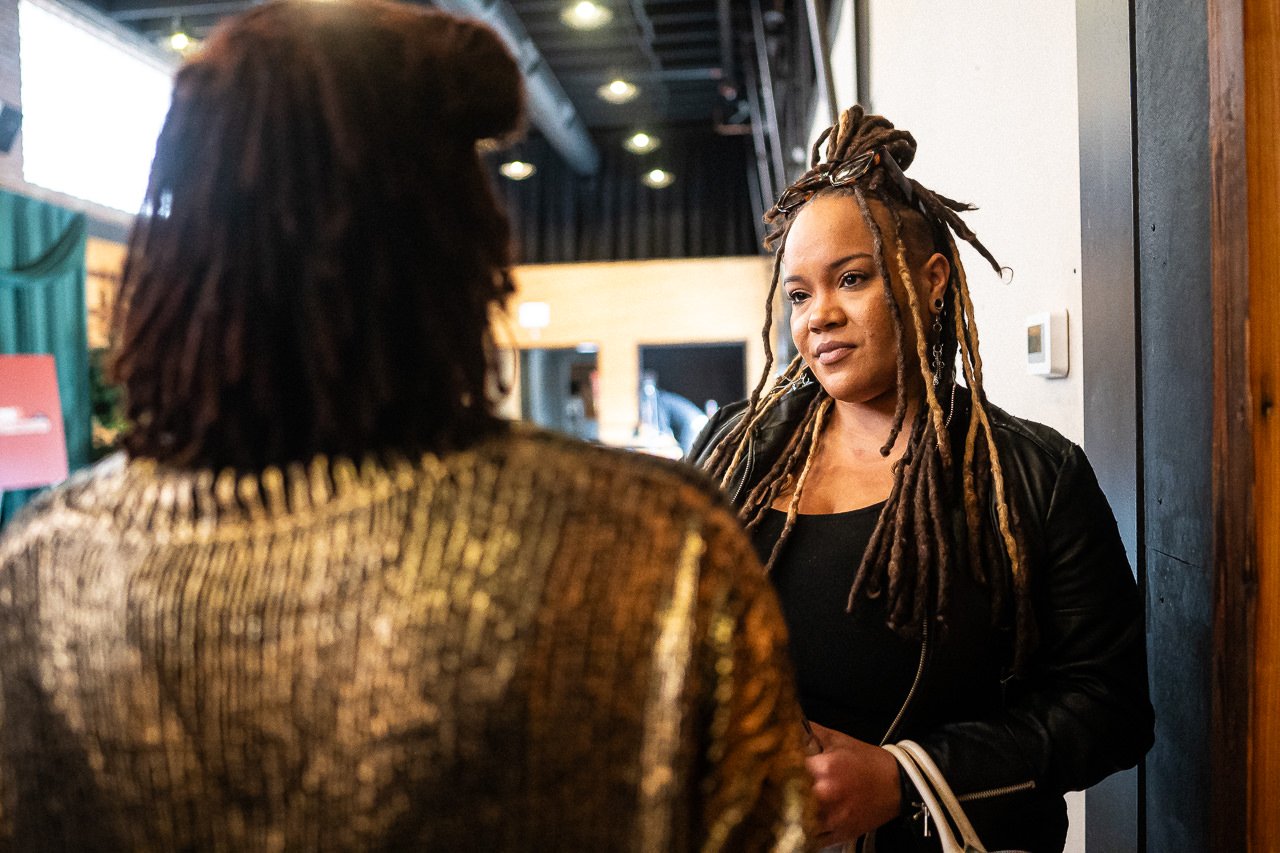
"We have entered an era where centering the care of Black women is non-negotiable. Not a nice to have. Not a panel topic. Not a D.E.I. line item. A non-negotiable."
She named the ground we were standing on in 2026:
Six hundred thousand Black women laid off since February 2025.
A country built and sustained on the extraction of Black women's genius, grace, and grief.
She traced the through-line of who the country has watched: Ida B. Wells writing truth into the record when no one else would pick up the pen, Shirley Chisholm running and shattering ceilings, and most recently Kamala Harris, whose campaign and its aftermath brought us to what she called a collective tipping point.
Then the bit that lands in my body as the compass:
"… because we are already busy architecting new worlds."
That is the posture I walked on stage to meet.
What followed was a land acknowledgment. The excerpts below are the load-bearing pieces, with notes on why I chose them. The full acknowledgment ran longer.
We are gathered in Chicago, on the unceded, stolen homelands of the Council of Three Fires. The Potawatomi called themselves Bodéwadmi, Keepers of the Fire. They tended the sacred council of three nations. They fished and traded along the Chicago, the Calumet, the Des Plaines. They practiced governance through relationship. The name of this city comes from shikaakwa, an Algonquian word for the wild garlic that blanketed the riverbanks.
I name that piece first because Chicago forgets it first. The city's name is a Potawatomi word. The land named itself through what it grew. Most people who live here learn the city's name as sound without meaning.
In 1833, the Treaty of Chicago forced the Potawatomi, Ojibwe, and Odawa to cede five million acres. By 1838, the remaining Potawatomi were marched at gunpoint 660 miles from Indiana to Kansas. Their village burned. Elders and children walked the entire way. Over forty people died. They call it the Potawatomi Trail of Death.
I name those dates because the structure of things intentionally pushes us to forget the history and often would rather we didn't remember.
"Erasure is the mode of conduct"
was the line I offered next,
"but it never fully works. Because, the land remembers. The water remembers. The people remember. The art carries it forward."
Chicago is layered. The Great Migration began in 1916. Bronzeville became a capital of Black life. Addie Wyatt organized meatpackers and marched with King. Brenetta Howell Barrett built voter registration drives and school integration campaigns. Lorraine Hansberry, born on the South Side, put a Black family's fight for housing on Broadway and changed American theater forever. Fred Hampton at twenty-one fed four hundred children every morning, built the Rainbow Coalition across race and class, and was murdered by the state in his bed in December 1969.
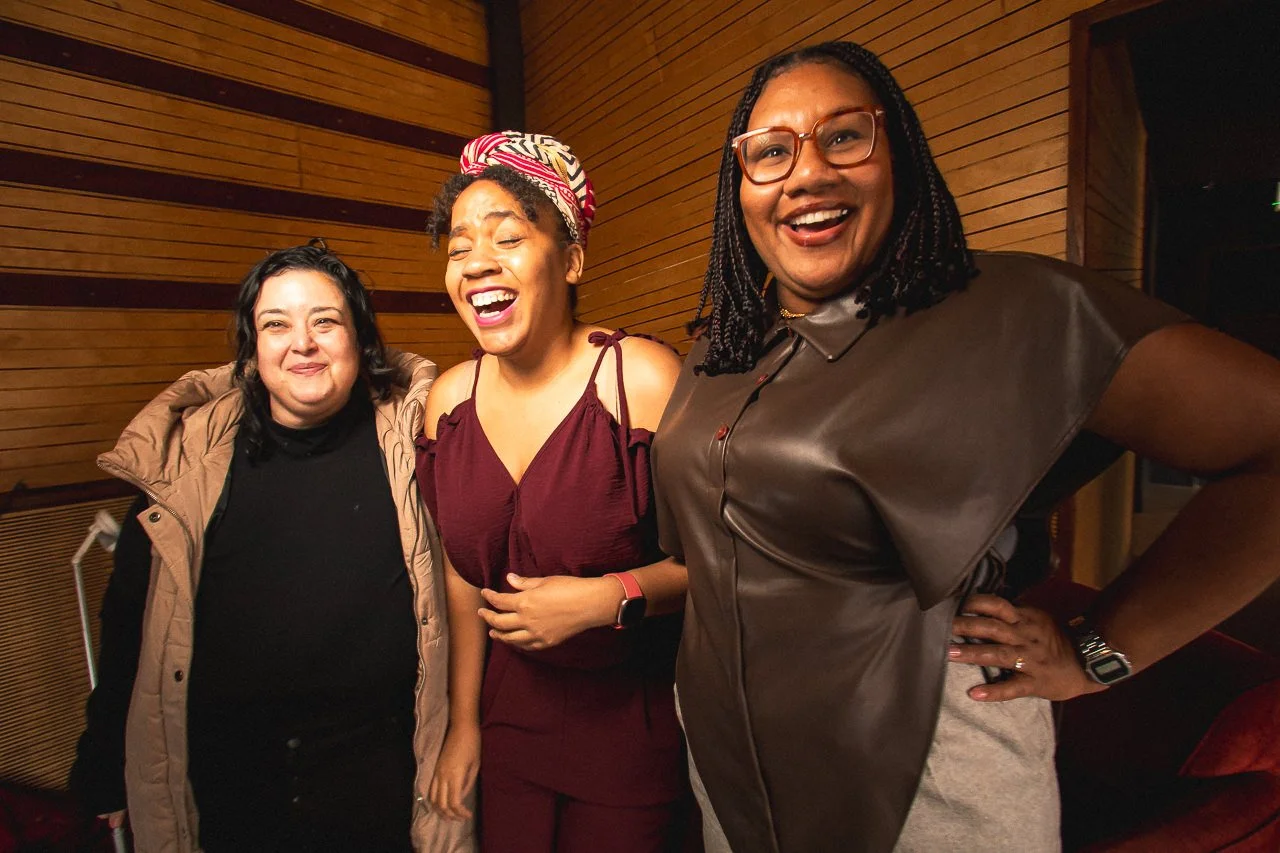
I include that layer because we aren’t just acknowledging land, we are acknowledging labor and soil. The room being opened was a room of Black women directors and leaders in Chicago. The arc from Bronzeville to Fred Hampton to the women Carmen Morgan held in conversation that afternoon is one arc.
Black Chicago has always done this. Organized in the face of violence. Built what the system refused to provide. The art was always part of the organizing.
That is why the opening matters.
Nathalie set the stakes. I offered the ground. Together those two practices named what the room actually was. A reckoning. A non-negotiable made audible.
Chicago as the layered, contested, brilliant, grieving, still dreaming ground we were standing on together.